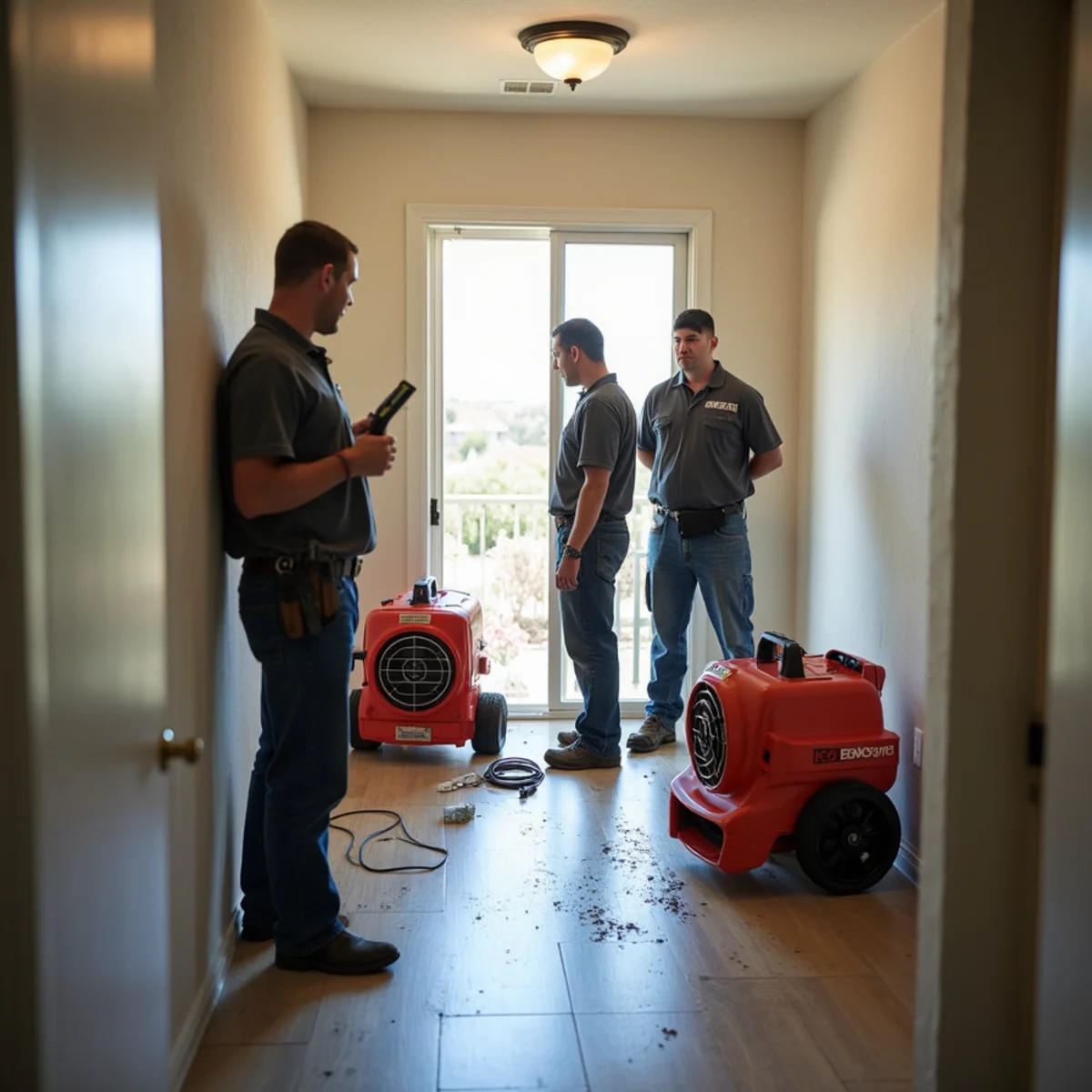

The most expensive leaks are the ones you never see. A burst pipe announces itself immediately, but a hidden leak, inside a wall, under the slab, behind a cabinet, can run for weeks or months quietly soaking your home and inflating your bills. By the time it shows up as a stain or a soft floor, it has often done real damage. The good news is that hidden leaks leave clues if you know what to notice. Here are the signs Murrieta homeowners most often miss, and a simple test you can run tonight.
The signs homeowners miss
Hidden leaks whisper before they shout. Individually, each of these signs is easy to explain away, that is exactly why they get missed. Taken together, or noticed early, they are your best chance to catch a leak before it becomes a demolition project. Learn to treat the small anomalies as worth a second look rather than a shrug.
Warm spots on the floor
If you feel a warm patch on a tile or vinyl floor, especially in a home built on a concrete slab, pay attention. It can mean hot water is leaking from a pipe running through or under the slab, warming the floor above it. You might notice it under bare feet in one spot while the rest of the floor is cool. A warm spot with no appliance or sunlight to explain it is a classic sign of a hot-water slab leak, and it is one of the more reliable tells homeowners can feel directly.
A water bill that jumped for no reason
Your water bill is a leak detector you already pay for. If your usage climbs noticeably with no change in habits, no houseguests, no new landscaping, no filled pool, that water is going somewhere, and a hidden leak is a leading suspect. A running toilet or a slab leak can waste a startling amount of water continuously. Compare a few recent bills against the same months last year. A steady, unexplained upward creep is worth investigating before it becomes a much larger number.
Keep last year's bills handy
Seasonal swings are normal, watering goes up in summer. The signal to watch for is usage that is higher than the same month a year ago with no lifestyle change to explain it. That year-over-year comparison filters out the seasonal noise.
The sound of water when everything's off
Stand still in a quiet house with every faucet and appliance off, and listen. If you hear a faint hiss, trickle, or the sound of running water inside a wall or under the floor, that is water moving through a pipe when nothing should be drawing it. It is one of the simplest checks you can do, and it costs nothing. Late at night, when the house and neighborhood are quietest, is the best time to hear it. A persistent running-water sound with all fixtures off points to a leak somewhere in the system.
Other quiet clues
A few more signs that often go unread:
- A drop in water pressure that develops gradually, as pressure escapes through a leak.
- A musty or earthy smell in a room with no visible water, often the first sign of moisture inside a wall or under flooring.
- Stains, bubbling paint, or a sagging spot on a ceiling or wall.
- New cracks in flooring or walls, which a slab leak can cause as moisture shifts the foundation.
- Mold or mildew appearing in a spot that should be dry.
The meter test you can do tonight
Here is a reliable do-it-yourself check for a whole-house leak:
- Turn off every water fixture and appliance in the house, faucets, the dishwasher, the washing machine, the ice maker, everything.
- Find your water meter, usually near the street in a covered box, and look at the reading and the small leak-indicator dial or triangle if it has one.
- Do not use any water for one to two hours, then read the meter again.
- If the reading changed or the leak indicator moved while everything was off, water is escaping somewhere, you have a leak.
For toilets specifically, add a few drops of food coloring to the tank and wait fifteen minutes without flushing. If color appears in the bowl, the flapper is leaking, a common and easily fixed water-waster.
Water damage right now? Don't wait.
45-minute average dispatch across Murrieta • available 24/7 • licensed & insured
When to bring in leak detection
If the meter test confirms a leak but you cannot see where it is coming from, that is the moment for professional leak detection. We locate hidden leaks without tearing your home apart, using acoustic listening equipment, thermal imaging, and pressure testing to pinpoint the source, whether it is in a wall or under the slab. If it turns out to be beneath the foundation, our slab leak restoration handles both the leak and the water damage it caused. We help homeowners across Greer Ranch and Los Alamos Hills find these quiet leaks early. If you want to understand how we pinpoint a slab leak specifically, our guide on how pros find slab leaks without tearing up your floor walks through the tools.
Why catching it early pays off
Every one of these signs is your home trying to tell you something before the damage compounds. A hidden leak caught from a warm floor spot or an odd water bill is often a targeted repair. The same leak ignored for months can mean saturated framing, mold, foundation movement, and a far larger bill. The habit worth building is simple, when something small seems off, water-wise, look into it rather than waiting for it to explain itself the hard way.
Frequently Asked Questions
Run the meter test. Shut off all water inside and out, note the meter reading and leak indicator, wait one to two hours without using water, then check again. Any movement means water is escaping somewhere. For toilets, a few drops of food coloring in the tank reveals a leaking flapper.
In a slab home, a warm patch on the floor often means hot water is leaking from a pipe under the slab and heating the floor above. If there is no appliance, vent, or sunlight to explain it, treat a warm spot as a likely hot-water slab leak and have it checked.
Yes. A continuous leak, like a running toilet or a slab leak, wastes water every hour of every day, which adds up fast on a monthly bill. An unexplained jump in usage compared to the same month last year is one of the most reliable early signs of a hidden leak.
Leak detection locates exactly where a hidden leak is, in a wall or under the slab, using acoustic, thermal, and pressure tools, so no one opens the wrong wall. Once it is pinpointed, the repair and any water-damage cleanup follow. We handle the detection and the restoration together.
Written & reviewed by the Water Damage Restoration Murrieta team
IICRC-certified, licensed & insured water damage restoration professionals serving Murrieta and southwest Riverside County. Questions about your situation? Call (201) 277-9344 — we answer 24/7.
Serving these areas: