You came home to a soaked carpet. Maybe a supply line let go, the dishwasher overflowed, or a slow drip finally showed itself after a day. The first instinct is a good one: get the water out fast. So you grab or rent a wet/dry shop-vac and start pulling. The tank fills, the carpet looks better, and it feels like you are winning. Here is the hard part we see on almost every call: a shop-vac removes only a fraction of the water in a flooded carpet, and the water it leaves behind is the part that causes the real damage.
We are not saying that to sell you anything. If your carpet caught a cup of clean water, a shop-vac and a fan might be all you need. But once water spreads across a room, the math changes fast, and understanding what is happening under your feet helps you make the right call before mold gets a head start.
A carpet is three layers, not one
When people picture a wet carpet, they picture the fibers on top. But a carpeted floor is really a stack of materials, and water soaks into all of them:
- The face carpet, the fibers you see and walk on. This dries fastest and is what a shop-vac reaches best.
- The pad, or cushion, the spongy foam or rubber layer underneath. It is built to compress and absorb, which means it soaks up and holds water like a sponge.
- The subfloor beneath the pad. In Murrieta that is very often a concrete slab, which wicks moisture into its surface and holds it at the seams and edges.
A shop-vac pulls water off the top layer and maybe the very top of the pad. It cannot make enough continuous airflow or suction to lift water back up through the pad against gravity. So the pad stays saturated, and the moisture pressed against the subfloor has nowhere to go but sideways and down.
Why the pad is where the trouble lives
The pad is the single biggest reason a shop-vac is not enough. A standard half-inch bonded pad holds a lot of water per square foot, and it releases that water slowly. Run your hand over a carpet a day after a shop-vac job and the surface can feel dry while the pad underneath is still heavy and cold. That trapped water keeps the underside of the carpet and the top of the slab damp for days.
This is exactly what mold wants
A saturated pad against a slab creates a warm, dark, damp pocket, the ideal environment for mold. In our climate it can begin growing within 24 to 48 hours, out of sight, before you smell anything.
What professional extraction actually pulls out
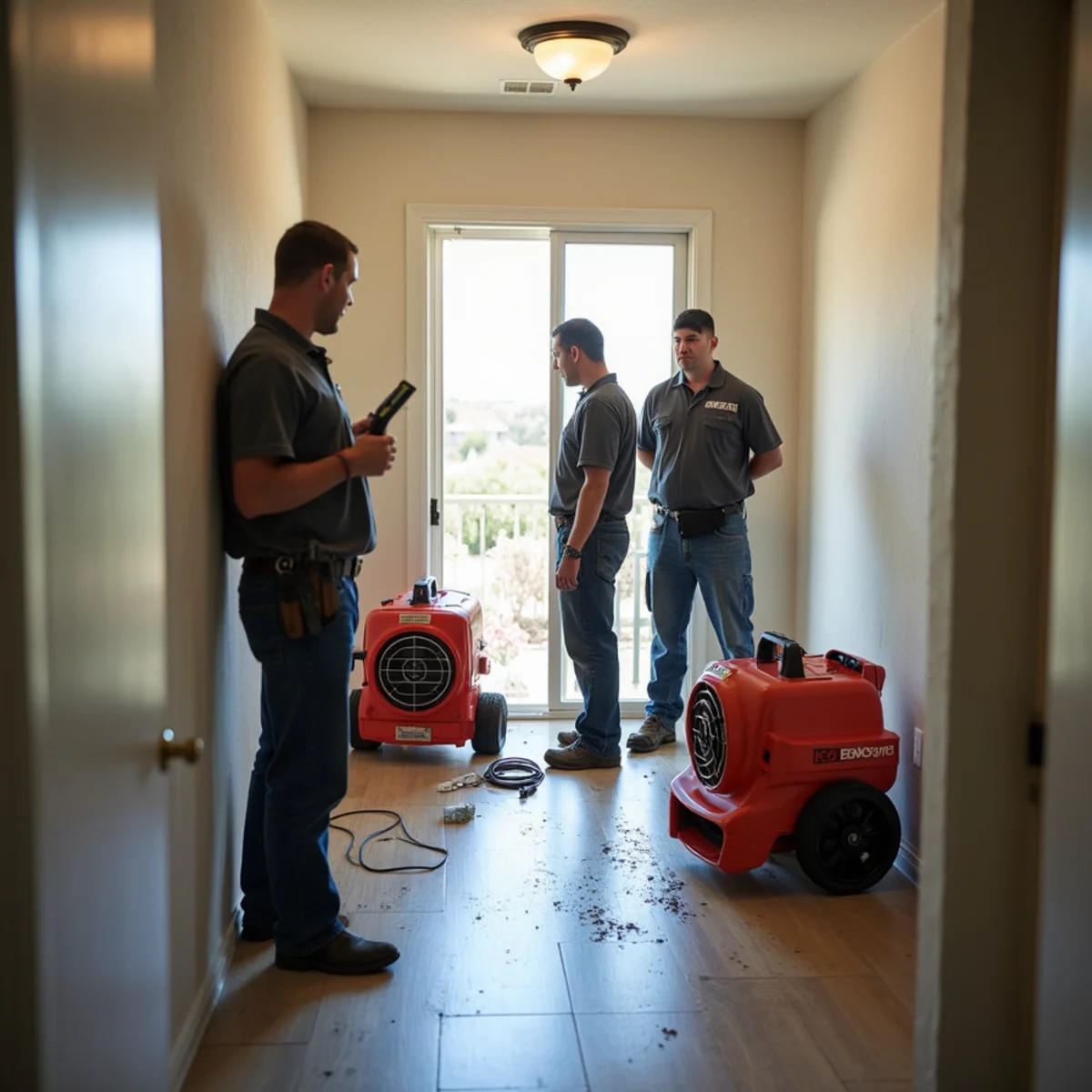
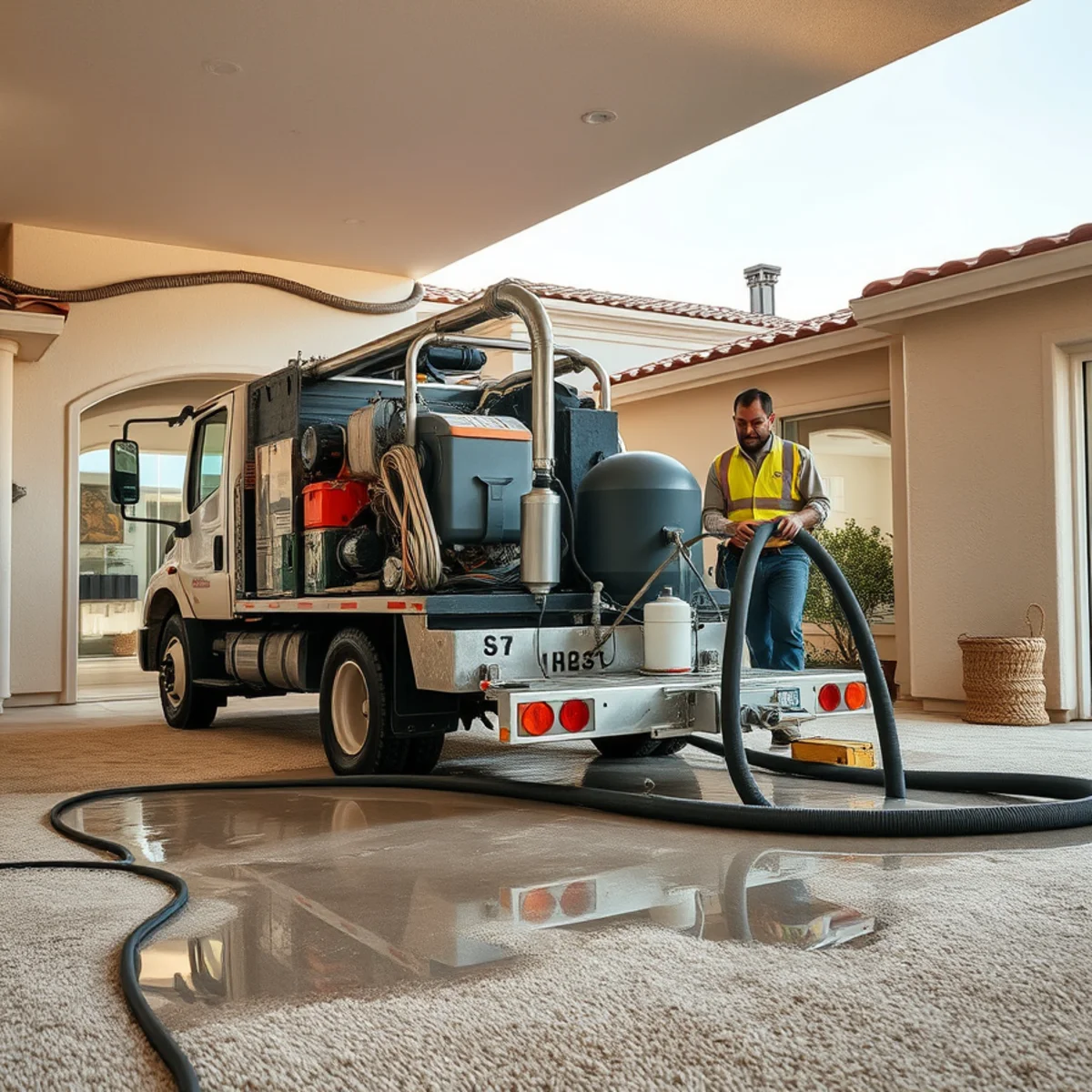
When we arrive for water extraction, we are not using a bigger shop-vac. The tools and the technique are different. Truck-mounted and high-output portable extractors move far more air and hold far more vacuum, and we use weighted extraction tools that press the carpet and pad down with the technician's body weight. That squeezes water up and out of the cushion instead of skating over the top of it. On one pass through a room, we routinely pull gallons that a shop-vac left behind.
We also make decisions a rental machine cannot. We check whether the pad can be saved at all, whether the carpet should be floated (lifted at one edge and dried from underneath), and whether the water was clean or contaminated. Those calls change everything about what happens next.
The moisture readings that tell the real story
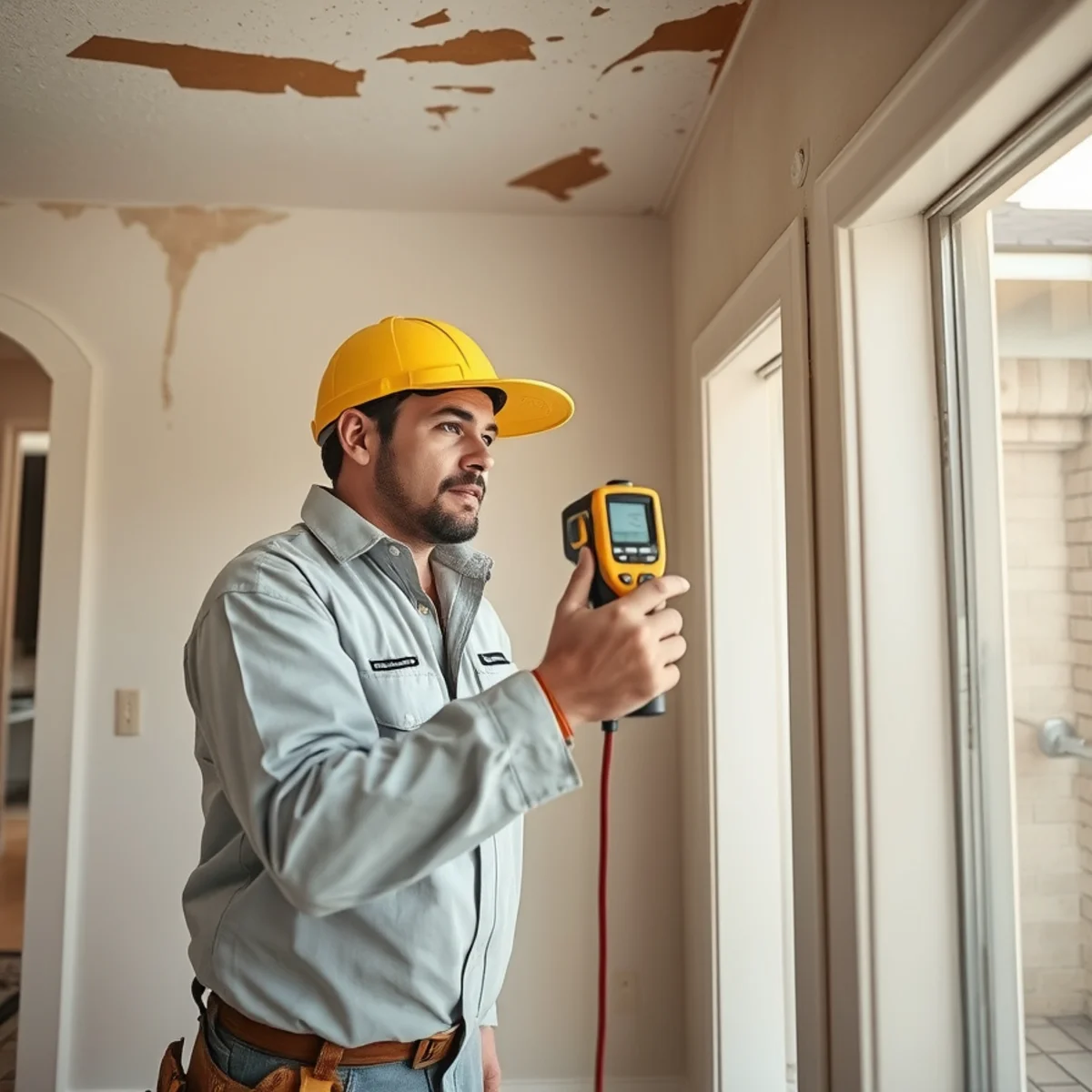
You cannot manage what you cannot measure. We use a moisture meter to read the carpet, pad, baseboards, and the bottom foot of drywall, and a thermal camera to spot cool, wet patches that are invisible to the eye. A dry concrete slab and a slab that still reads wet look identical from a standing height. The meter is how we know when a floor is genuinely dry versus dry on the surface only, and it is how we set a target instead of guessing.
Murrieta's dry air helps, but it is not a drying plan
Our hot, dry summers do move moisture, and that works in your favor. But a closed room with a wet pad does not dry itself on schedule, and the humidity that evaporates off the carpet has to go somewhere. Without a dehumidifier pulling it out of the air, that moisture just migrates into drywall, baseboards, and cabinet toe-kicks. Proper structural drying pairs air movers with dehumidification so the water leaves the building instead of relocating inside it. Homeowners in Spencer's Crossing and Meadow Ridge call us for exactly this reason after a rental machine seemed to do the job.
Water damage right now? Don't wait.
45-minute average dispatch across Murrieta • available 24/7 • licensed & insured
What happens if you leave water in the pad
Two things, usually. First, the smell. Within a few days a damp pad and subfloor start to give off a musty odor as microbes wake up. Second, delamination and mold. The carpet backing can separate, the pad breaks down, and mold colonizes the underside of the carpet and the slab. At that point you are not drying a floor, you are replacing carpet and pad and paying for mold remediation you could have avoided. The shop-vac was not wrong, it was just never built to reach the layer that matters.
If your carpet has been wet for more than a few hours, or the water covered more than a small area, get eyes and a meter on it quickly. A fast, thorough extraction is almost always cheaper than what grows when water sits.
Frequently Asked Questions
Fans move surface moisture but do nothing for a saturated pad and subfloor. Extraction removes the bulk water first, then air movers and a dehumidifier finish the job. Skipping extraction leaves gallons behind and stretches drying into the mold window.
It depends on the water. With clean water caught quickly, the pad can sometimes be saved by lifting the carpet and drying both. With gray or black water, or a pad that stayed wet too long, we remove and replace it because it cannot be reliably cleaned.
We take moisture-meter readings on the carpet, pad, subfloor, and nearby walls and compare them to a dry reference reading in an unaffected part of the home. Drying is done when the wet materials match that dry standard, not when the surface feels dry.
As soon as possible. Mold can start within 24 to 48 hours, so the goal is to remove standing water the same day and have drying equipment running quickly. Our Murrieta team is available 24/7 for exactly that reason.
Written & reviewed by the Water Damage Restoration Murrieta team
IICRC-certified, licensed & insured water damage restoration professionals serving Murrieta and southwest Riverside County. Questions about your situation? Call (201) 277-9344 — we answer 24/7.
Serving these areas: