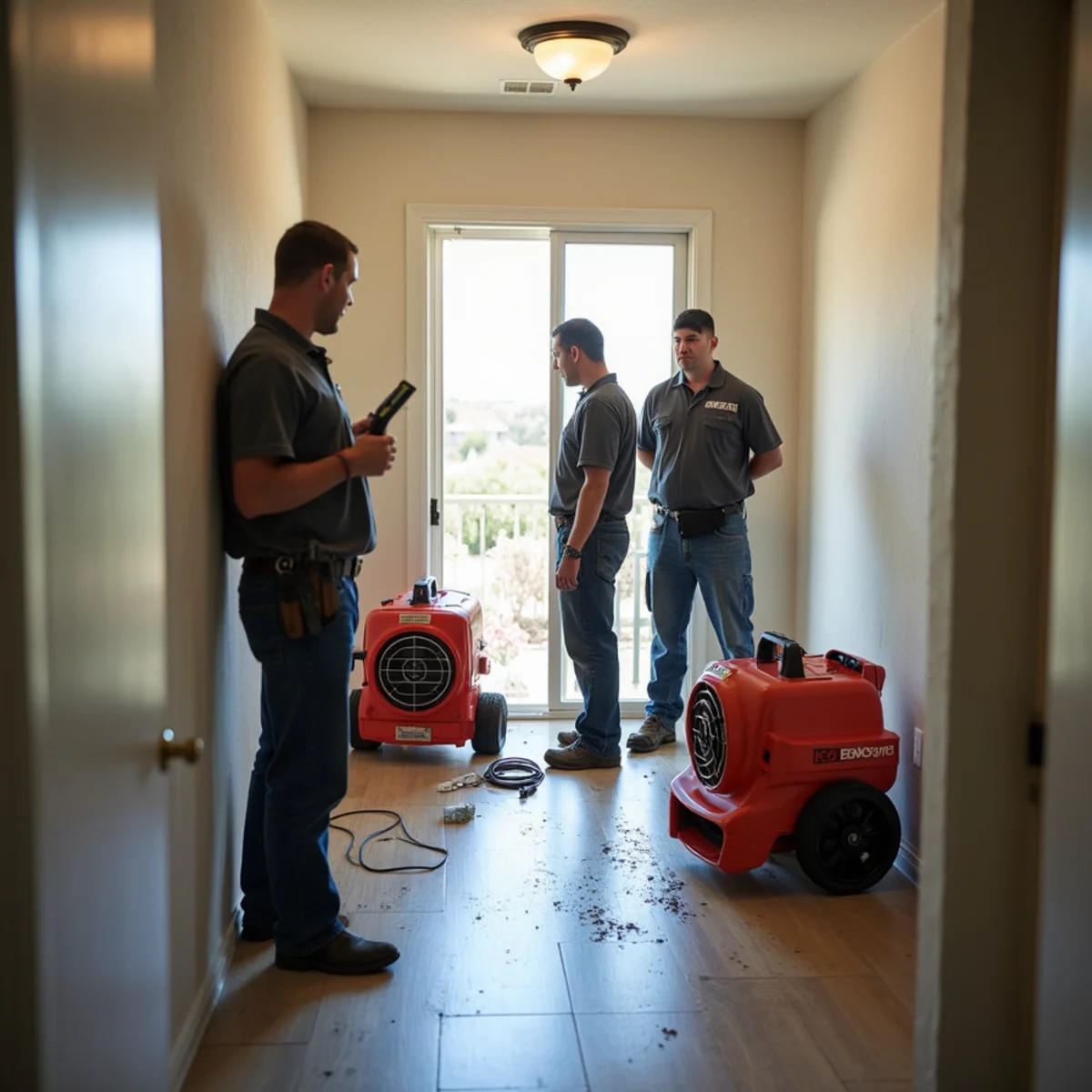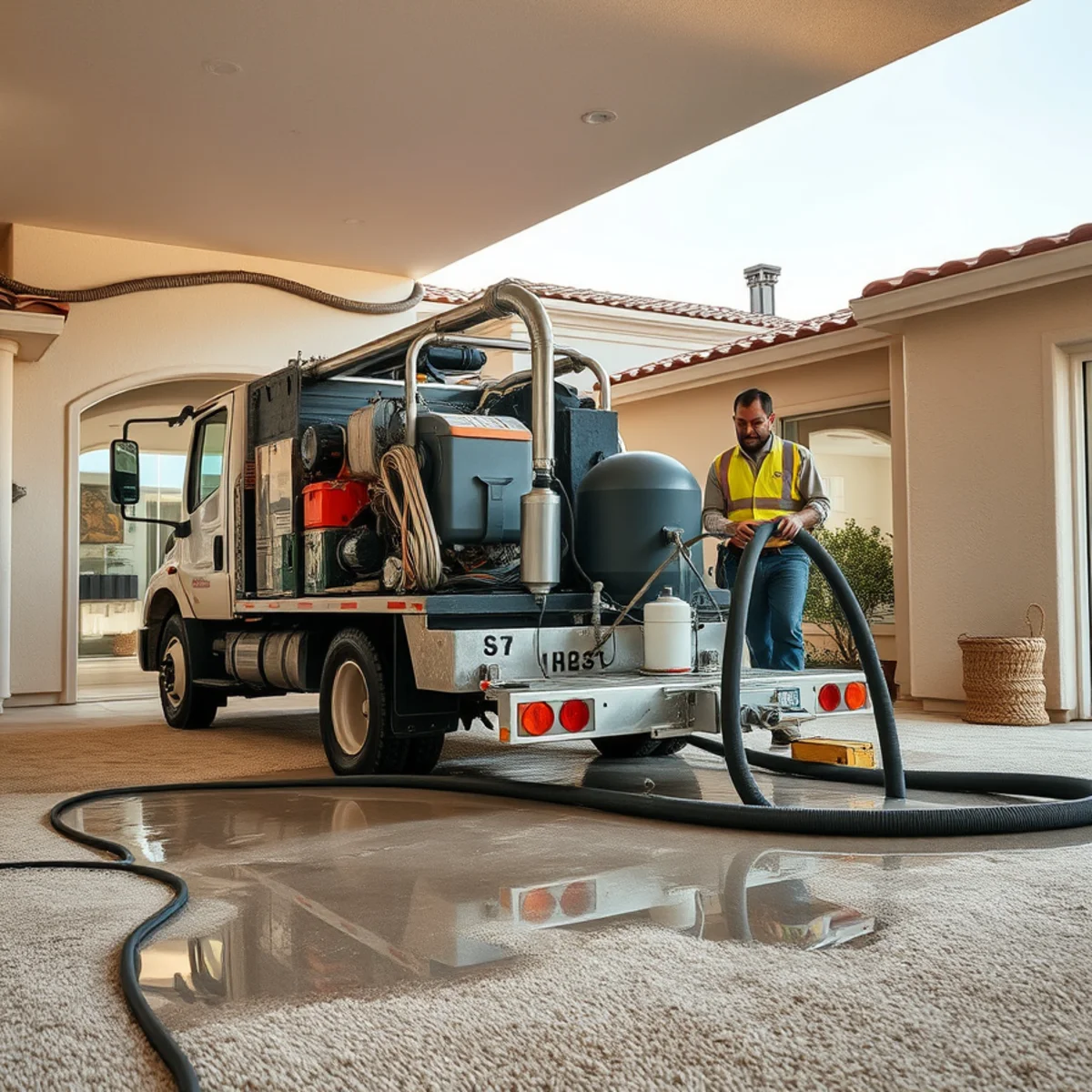

The leak is fixed. You mopped, ran fans, and the floor feels dry. But days or weeks later there is a smell, that damp, earthy, basement-like mustiness that hits you when you walk in or open a closet. Air fresheners cover it for an hour, then it comes back. Here is what that smell is telling you: the water is not actually gone. Somewhere, in a wall cavity, under the flooring, or behind a cabinet, moisture is still trapped, and something has started to grow. The nose catches it before a meter does.
What that musty smell really is
That odor is not the water itself. It is the byproduct of microbial growth, tiny gases released as mold and bacteria feed on damp organic material like drywall paper, wood, dust, and glue. Restoration pros call them microbial volatile organic compounds, and your nose is remarkably good at detecting them at low levels. In plain terms: if it smells musty, moisture has been sitting long enough for something to start living in it. The smell is the symptom, not the cause.
'Surface dry' is not the same as 'dry'
Most musty-smell calls trace back to the same thing. The surfaces you could see and reach dried out, so the job felt finished, but the moisture that soaked deeper never left. A slab can feel dry to the hand while it is still wet at the edges. Drywall can look fine on the painted face while the cavity behind it holds water. Carpet fibers dry while the pad underneath stays damp. Fans handle what they can touch. They do nothing for what is sealed inside a wall or under a floor.
The smell is a clock, not a nuisance
A persistent musty odor means active microbial growth in a damp material. It will not clear on its own because the moisture feeding it is still there. The longer it runs, the more material it affects, so treat the smell as a reason to investigate now.
Where trapped moisture hides
After years of these calls, the hiding spots are predictable:
- Inside wall cavities, especially the bottom foot where water wicked up and behind wet insulation.
- Under and behind cabinets, in the toe-kick and against the back panel where air never reaches.
- Beneath the flooring, between a laminate or vinyl plank and the slab, or in a carpet pad.
- Behind baseboards and trim that were never pulled during the original cleanup.
- In the subfloor and the sill plate, the wood framing that sits directly on the slab.
These spots share one thing: they are sealed off from moving air, which is exactly why fans never reached them and why they stay damp for so long. A wall cavity is a closed box, and the moisture inside it can only leave as fast as it can migrate out through the drywall, which is slow. That is why a leak that seemed handled a month ago can still be quietly feeding a smell today. The water did not disappear, it just moved somewhere the fans could not follow.
Why air fresheners and paint make it worse
The temptation is to mask the smell or seal it away. Both backfire. Air fresheners just add scent on top of an active moisture problem while the material keeps degrading underneath. Painting or caulking over a musty wall traps the moisture and the growth behind a fresh coat, which slows drying even further and hides the evidence you will want for an insurance claim. Covering the smell buys a few days and costs you a bigger repair.
Water damage right now? Don't wait.
45-minute average dispatch across Murrieta • available 24/7 • licensed & insured
How we track down the source
Finding hidden moisture is detective work, and we do it without tearing the house apart. We start with a moisture meter to map how far the dampness spread, comparing readings to a dry reference elsewhere in the home. A thermal imaging camera helps us see cool, evaporating patches behind walls and under floors that are invisible to the eye. Where readings are high, we can make a small inspection opening to confirm before committing to any work. This is the same leak detection approach we use to find active leaks, applied to finding where old water is still hiding. Homeowners in French Valley and Warm Springs call us specifically because the smell will not quit.
Drying it out for real, then removing what cannot be saved
Once we find the wet pocket, we open it up enough to dry it properly with directed air movers and a dehumidifier, real structural drying rather than surface fans. If a material is too far gone, wet insulation, swollen particleboard, drywall that has been damp for weeks, it comes out, because you cannot deodorize your way past a colonized material. If growth has taken hold, we handle it with proper mold remediation, containing the area so spores are not spread through the house while we work.
When the smell means mold
Not every musty smell is a major mold problem, but every musty smell means enough moisture has been present long enough for microbial activity to begin. That is your window to act. Caught early, it is often a matter of drying a hidden pocket and replacing a small amount of material. Left alone, it becomes a wall you open to find blackened framing. The smell is doing you a favor by showing up. The right move is to find the moisture, dry it completely, and remove what the water ruined.
Frequently Asked Questions
Only if the trapped moisture actually leaves, which surface fans rarely accomplish. As long as a damp pocket remains, the microbial activity causing the smell continues. The reliable fix is to locate the moisture, dry it fully, and remove any material that is already colonized.
Mostly, yes. We map moisture with meters and use thermal imaging to see wet areas behind surfaces. If a reading is high in one spot, we may make a small inspection opening to confirm, but we do not open walls blindly. The tools tell us where to look first.
It always means moisture has been present long enough for microbial growth to begin, which includes mold and bacteria. Whether it is a small, easily corrected issue or a larger one depends on how long it sat and what got wet. An inspection tells us which.
Paint seals the surface but not the moisture behind it, so the smell returns. We would check the moisture in that area, and if it reads wet, open enough to dry the cavity and replace anything the water ruined. Painting over it delays the real fix.
Written & reviewed by the Water Damage Restoration Murrieta team
IICRC-certified, licensed & insured water damage restoration professionals serving Murrieta and southwest Riverside County. Questions about your situation? Call (201) 277-9344 — we answer 24/7.
Serving these areas: