
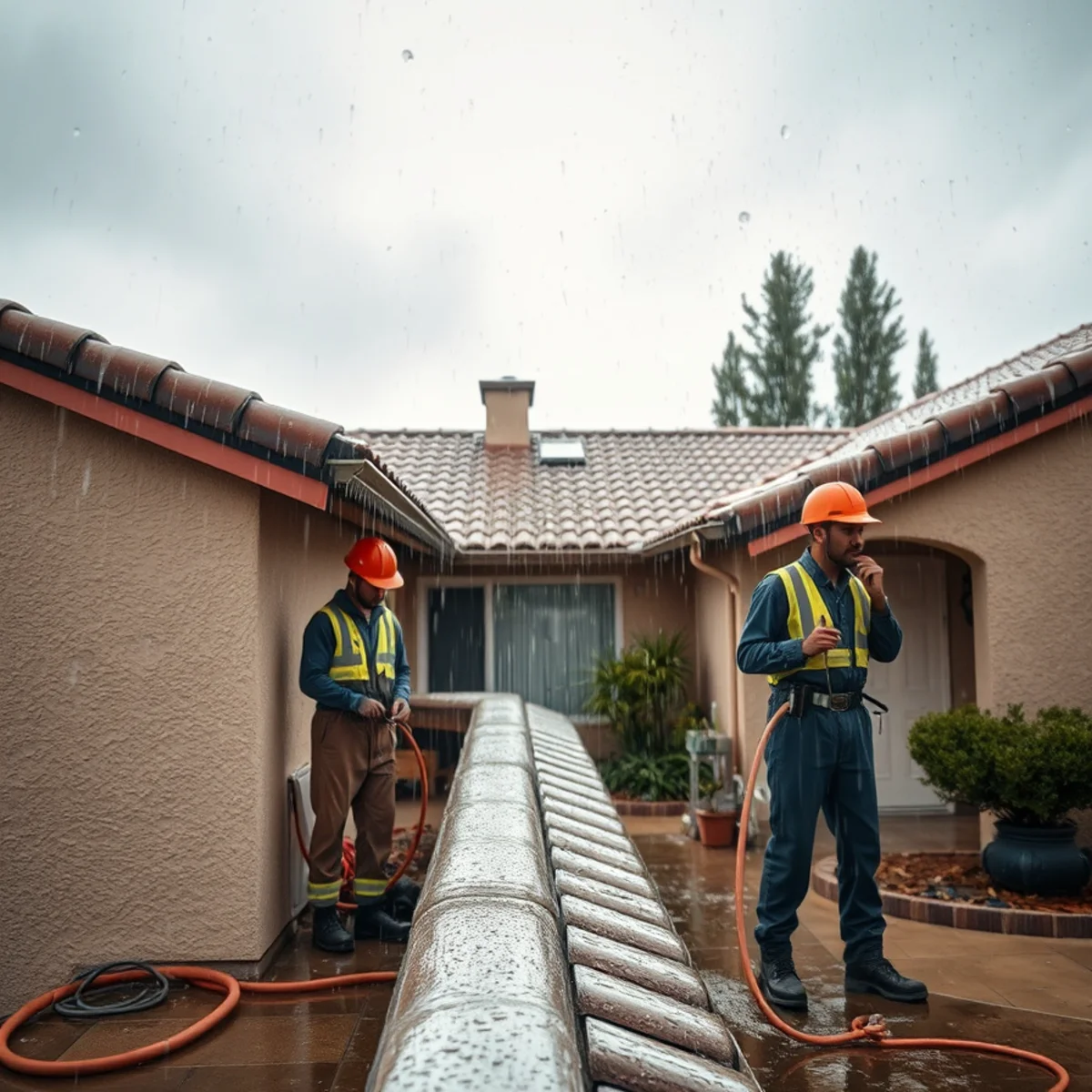
Murrieta has a dry-summer reputation for good reason. But the roughly 11 inches of rain the area averages each year does not spread out evenly — almost all of it falls between November and March, and often in a few concentrated storms. That pattern is exactly why homes here get caught off guard. After months of dry heat, the first real storm can find every weak spot at once. The fix is neither complicated nor expensive — most of it is a Saturday with a ladder, a caulk gun, and a garden hose. What it takes is doing the work before the clouds roll in rather than after. Here is how we think about getting a Murrieta home ready, from the roof down to the soil around the foundation.
A whole year's rain in a few months
Eleven inches may not sound like much next to the Midwest or the Southeast, but timing is everything. When most of your annual rain arrives in a handful of winter systems, the ground is dry and hard from summer, so water runs off instead of soaking in. Roofs that baked and cracked all summer meet their first heavy rain in November. Gutters clogged with dry leaves overflow. The result is that our busiest calls are not spread across the year — they cluster in those wet months. Getting ahead of the season, before the first storm, is the single best thing you can do.
Know your window
In Murrieta, the rainy season runs roughly November through March. If you do your storm prep by late October, you are ahead of nearly every leak we see.
Start with the roof
Your roof is the first line of defense, and summer is hard on it. UV exposure and heat dry out and curl asphalt shingles, crack the sealant around vents and skylights, and loosen tiles. Before the rains, look for missing, cracked, or lifted shingles and tiles, check the flashing around chimneys and vents, and make sure the seals on any roof penetrations are intact. If climbing up is not safe for you, a roofer can inspect it. Catching a small gap now is far cheaper than roof leak restoration and a stained ceiling in January. While you are up there — or while the roofer is — pay attention to the valleys where two roof planes meet. They carry the most water of anywhere on the roof and are a frequent spot for worn or lifted material that only leaks under a heavy, driving rain, which means it can pass a casual dry-day glance and still fail in the first big storm.
Clear the water's path
Once rain hits the roof, it needs a clear route away from your home. Clogged gutters overflow and dump water against the foundation or behind fascia boards. Downspouts that end right at the slab push water back toward the house. Yard drains buried under summer debris cannot do their job. Walk the perimeter and make sure water has somewhere to go that is not your walls or your slab.
Check the openings water uses
Water is patient and it finds gaps. Before the season, look closely at the places it tends to sneak in:
- Windows and doors — reseal cracked caulk and replace worn weatherstripping.
- Garage door — check the bottom seal, a common entry point for wind-driven rain.
- Roof penetrations — vents, skylights, and satellite mounts where flashing can fail.
- Foundation and slab — hairline cracks that let water wick in during long storms.
- Exterior outlets and hose bibs — gaps in the wall around them.
Your pre-season walk-through
If you do nothing else, run through this short checklist by late October:
- Clean gutters and downspouts, and flush them with a hose to confirm they drain.
- Extend downspouts so they release at least four to six feet from the foundation.
- Inspect the roof for damaged shingles, tiles, and flashing — repair before the rain.
- Reseal windows, doors, and the garage door bottom seal.
- Clear yard and area drains of leaves and summer debris.
- Test your sump pump, if you have one, by pouring in water and confirming it kicks on.
- Locate your main water shut-off so you can act fast in an emergency.
- Grade soil so it slopes away from the house, not toward it.
Do it during a dry week
Sealant, caulk, and roof repairs cure best when it is warm and dry. Tackling your storm prep in the last dry stretch of fall gives everything time to set before the first November system.
Water damage right now? Don't wait.
45-minute average dispatch across Murrieta • available 24/7 • licensed & insured
Why timing beats gadgets
There is a whole market of storm-prep products — gutter guards, downspout diverters, door dams, and water alarms — and some are genuinely useful. But none of them replaces the basics on this list. A pricey gutter guard on a roof with cracked flashing still leaks, and a door dam does nothing for water coming through a failed roof penetration. The best return on your time and money is almost always the unglamorous work: clean gutters, sound flashing, sealed windows and doors, and water directed away from the foundation. Do those first, then add gadgets as a second layer if you like — never as a substitute for the maintenance that actually keeps water out. The homes that come through winter dry are rarely the ones with the most equipment; they are the ones that did the basics on time.
When a storm gets the better of your prep
Even a well-prepared home can lose a shingle to a Santa Ana gust or take on water when a drain backs up mid-storm. When that happens, quick drying is what keeps a wet ceiling from becoming a moldy one. Our Murrieta team handles storm damage cleanup, flood cleanup, and full drying around the clock, following IICRC S500 standards. We are licensed, insured, and local, serving neighborhoods like Warm Springs and Creek Side where winter runoff is a regular concern. If a storm finds a way in, call our 24/7 team and we will get water out and drying started before the damage spreads. We are your neighbors for water damage restoration in Murrieta.
Frequently Asked Questions
Almost all of Murrieta's roughly 11 inches of annual rain falls between November and March, often in a few concentrated storms. The best time to prepare your home is late October, before the first system arrives.
After a long dry summer, roofs are cracked, gutters are full of dry debris, and the ground is hard and sheds water. The first heavy rain finds all of those weak spots at once, which is why early-season leaks are so common.
Aim for at least four to six feet away from the foundation. Downspouts that dump right at the slab push water back toward the walls and can lead to slab and foundation moisture problems during long storms.
Most Murrieta homes do not, but if you have a low-lying lot, a basement-style space, or a history of pooling water, one can help. If you have a sump pump, test it before the season so you know it works when the rain comes.
Written & reviewed by the Water Damage Restoration Murrieta team
IICRC-certified, licensed & insured water damage restoration professionals serving Murrieta and southwest Riverside County. Questions about your situation? Call (201) 277-9344 — we answer 24/7.
Serving these areas: