If you live in Murrieta or anywhere in the Inland Empire, you already know our water is hard, you see it in the white scale on faucets and the spots on your glassware. What most homeowners do not realize is that the same mineral-heavy water that crusts your showerhead is also working on the copper pipes inside your walls and under your slab, slowly, from the inside. Over years, that process can produce pinhole leaks, tiny perforations that let water escape where you cannot see it. Here is why our water is tough on copper and what you can actually do about it.
What "hard water" means here
Hard water simply means water with a high level of dissolved minerals, mainly calcium and magnesium, measured as total dissolved solids, or TDS. The higher the TDS, the harder the water. Our region sits on the hard end of the scale. That hardness is not a health hazard to drink, but it changes how the water interacts with your plumbing, leaving mineral scale on surfaces and, more importantly, altering the chemistry inside metal pipes in ways that promote corrosion over time.
Where our hard water comes from
The Inland Empire's hardness is largely geological. Much of the local supply draws on groundwater from basins like the Temecula and Pauba areas, and as that water moves through the ground it picks up dissolved minerals from the rock and soil. Groundwater with high mineral content is naturally hard, and that is what arrives at your tap. It is not a treatment failure, it is the nature of the source. Knowing that helps explain why hardness is a persistent regional fact rather than a temporary problem, it is coming from the ground the water sits in before it ever reaches you.
How hard water eats copper from the inside
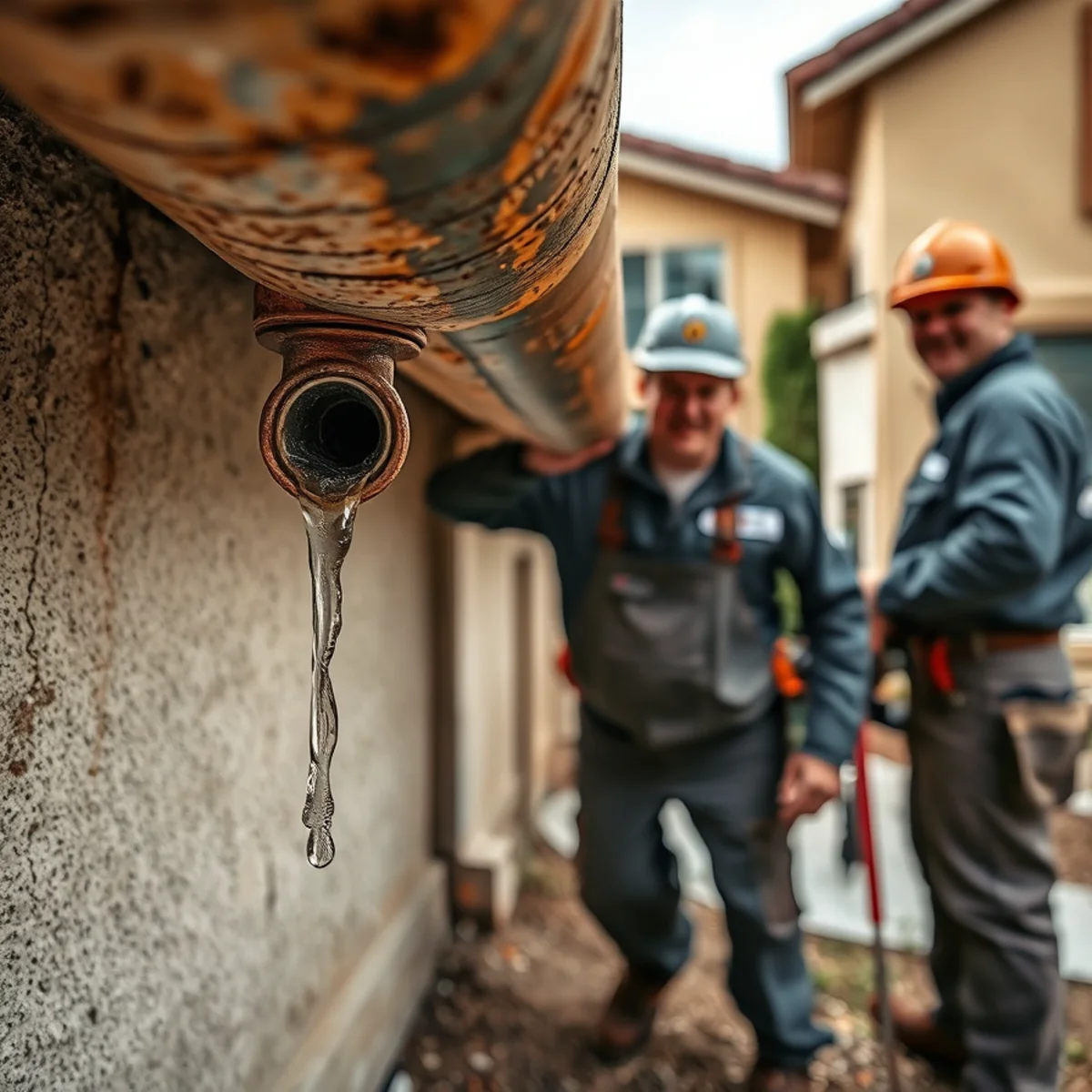
Copper pipe corrodes from the inside out through a process called pitting corrosion. In hard water, mineral scale deposits unevenly along the inner wall of the pipe. Where the scale is patchy, tiny electrochemical cells form between the covered and exposed areas of copper, and corrosion concentrates at specific points rather than spreading evenly. Over time those concentrated spots eat through the pipe wall, producing a pinhole, a leak often no bigger than a needle's point. The scale that hard water leaves behind is not just cosmetic, it sets up the exact conditions that let corrosion drill through copper at isolated points.
A pinhole is small but relentless
A pinhole leak does not gush, it weeps, continuously, often behind a wall or under the slab. That slow, hidden release is what makes it dangerous, it can soak framing and feed mold for weeks before anyone notices a stain or a smell.
The warning signs on your fixtures and pipes
Hard water and early copper trouble leave visible clues:
- Heavy white or green scale building up on faucets, showerheads, and fixtures.
- Green or bluish stains around drains and fittings, a sign of copper corrosion.
- Reduced water flow as scale narrows the inside of the pipes.
- Frequent spotting on dishes and glassware, and soap that does not lather well.
- On exposed pipe, in a garage or under a sink, small green deposits or a bead of moisture at one point.
What a pinhole leak does before you notice
The trouble with pinhole leaks is timing, the pipe fails long before you see evidence. A pinhole behind drywall can drip for weeks, soaking the wall cavity, the insulation, and the framing, before a stain finally bleeds through the paint or a musty smell gives it away. Under a slab, it can wet the foundation area quietly and show up as a warm floor spot or a rising water bill. By the time the symptom reaches you, the leak has usually been running for a while, which is why the hidden signs, an odd water bill, the sound of water, a musty odor, matter so much. Our guide to hidden leak symptoms covers how to catch them.
Water damage right now? Don't wait.
45-minute average dispatch across Murrieta • available 24/7 • licensed & insured
What homeowners can actually do about it
You cannot change the geology, but you can reduce the wear on your pipes and catch problems early:
- Consider a water softener, which reduces the mineral content reaching your plumbing and slows scale buildup.
- Keep your water pressure in a healthy range with a working pressure regulator, since high pressure stresses aging pipe.
- Watch for the early signs above and investigate promptly rather than waiting for a stain.
- If you have had repeated pinhole leaks, talk to a plumber about repiping affected runs, sometimes with a material less prone to this corrosion.
- Have your water and your pipe condition assessed if your home is older and you are seeing scale and stains together.
When a pinhole becomes an emergency
Sometimes a pinhole gives way to a larger split, or you finally discover one that has been leaking behind a wall for weeks. That is when it turns from a plumbing project into a water-damage problem. If you find an active leak, professional leak detection pinpoints exactly where it is, in the wall or under the slab, so the repair is precise. If the pipe has already caused significant damage or lets go suddenly, our burst pipe cleanup and drying limit how far the water spreads, and if it is under the foundation, our slab leak restoration handles both the leak and the moisture. We help homeowners across Mapleton and Bel Flora deal with hard-water pinhole leaks, and the earlier you catch one, the less of your home it touches.
Frequently Asked Questions
Hard water deposits mineral scale unevenly inside copper pipe, which sets up localized electrochemical corrosion called pitting. Corrosion concentrates at specific points and eventually eats a tiny hole through the pipe wall, a pinhole leak. Our high-mineral Inland Empire water accelerates that process over the years.
A softener reduces the mineral content reaching your pipes and slows scale buildup, which helps limit the conditions that drive pitting corrosion. It is not a guaranteed cure for pipe that is already corroded, but combined with proper pressure and early monitoring, it reduces the wear that leads to pinhole leaks.
Watch for the hidden signs, an unexplained rise in your water bill, the sound of running water with fixtures off, a musty smell, stains or bubbling paint, or a warm floor spot for a slab line. A meter test can confirm water is escaping, and leak detection pinpoints where.
Not necessarily from one leak. A single pinhole is often a targeted repair. But if you are getting repeated pinhole leaks throughout the house, that pattern suggests the pipe is reaching the end of its life, and repiping affected runs, sometimes with a different material, may be the better long-term fix.
Written & reviewed by the Water Damage Restoration Murrieta team
IICRC-certified, licensed & insured water damage restoration professionals serving Murrieta and southwest Riverside County. Questions about your situation? Call (201) 277-9344 — we answer 24/7.